
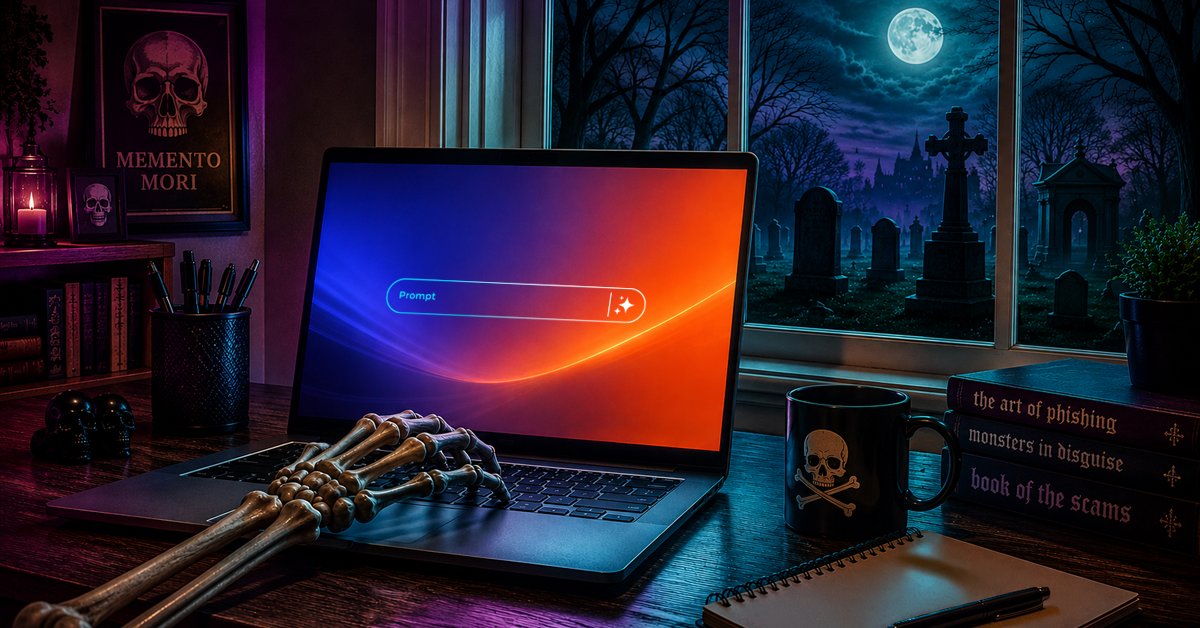
Halloween ads love monsters. Your real problem is quieter.
AI helps criminals write perfect emails, clone voices, and fake "IT support" chats that look like your bank, your vendor, or your own office manager. Bad grammar used to be a tell. It is not anymore. An urgent note about payroll, a wire, or a locked account can look routine.
If someone in your shop still relies on "it looked off," that test may fail this year.
What changed for small-business inboxes
Attackers no longer need a large team to sound local and professional. Generative AI drafts the lure. Voice tools can fake a quick call "from the owner" asking for a transfer. Fake login pages look cleaner. The goal is still the same: money, passwords, or files.
You do not need a costume. You need habits that survive a believable lie.
What owners should pressure-test now
MFA that is actually on. For email, banking, and the apps that hold customer data. No shared exceptions that never expire.
Second-channel money rules. Wires and sensitive changes get a call to a known number, never the number in the email or text. Practice it once with the bookkeeper.
Restore reality. If ransomware or a destructive login hits, can you get accounting files and the shared drive back? A green backup job is not the answer. Test it.
Access hygiene. Former employees, old vendors, and the intern account from last summer. Close them.
One practice scenario. A fake invoice or a fake IT call. Short. Real people. Write who reports what.
NewPush has supported 5,000+ SMBs as a disaster recovery, backup, and cybersecurity partner. The shops preparing for AI-assisted threats treat this as operating work, not a seasonal scare.
What not to do
Do not ban every AI tool and call it a strategy. Your team will use AI anyway for writing and research. Do not wait for a perfect policy before turning on MFA. Do not confuse "we read an article about deepfakes" with readiness.
Payroll and customers do not pause because the threat is novel.
Prepared for attack is not prepared to use AI
Knowing AI can disguise attacks is necessary. It is not the same as knowing how ready the company is to use AI well in the business.
A simple shop drill for AI-assisted scams
Pick one scenario: a polished email asking for a vendor payment change, or a call that sounds like the owner asking for a gift-card or wire rush. Run it with the office manager and bookkeeper. See who notices, who calls a known number, and who almost pays.
Write down the miss. Fix the rule. Put MFA and the restore test on the same month's list. Halloween marketing can wait. The inbox will not.
What "prepared" looks like by month-end
- MFA on email, banking, and the apps that hold customer data.
- One restore test completed, with a time written down.
- One second-channel money rule practiced with the bookkeeper.
- Former employee and vendor access reviewed.
- One AI-assisted scam scenario run and debriefed in fifteen minutes.
If those five are done, Halloween marketing can do whatever it wants. Your inbox defenses are no longer based on bad grammar.
Keep the scare useful
Use the Halloween noise as a calendar reminder, not as a strategy. The monsters are already in the inbox. Your job is MFA, restore proof, second-channel money rules, and one practiced scam. Do those, and the costume ads can stay on TV.
Where NewPush fits
Perfect grammar in a fake payroll email is no longer a tell. The shops that stay open teach people how to use AI tools without handing attackers a believable voice, and they still keep MFA, restore proof, and a second-channel wire rule.
Phase 0 of Project NoéMI is a short AI readiness check for the business. You get a Trainer login (the fluency seat) to start fluency the right way, with a next step you can use this quarter, not another half-finished security subscription.
More for small-business owners: https://business.newpush.com